

VMware’s Business Funded Actions (BFA) initiative is a targeted automation project designed to streamline the business unit restructuring process. Rather than undertaking a company-wide overhaul, it concentrates on eliminating Small Groups or multiple Small Groups.
The goal is to enhance efficiency by integrating globally standardized processes wherever feasible within the existing small-group elimination procedure. This approach empowers business leaders to effectively oversee their workforce year-round, eliminating the need for reliance on annual corporate restructuring events.
My Role:
UX Lead | Dev. Support
Design Tools:
Miro | Balsamiq | Figma
Before 2020
Although VMware favoured small group eliminations over corporate actions due to strategic reasons, business leaders found it daunting to initiate the process due to its manual nature, involving numerous email exchanges. The HR team could only undertake one action at a time, often relying on unofficial documents to guide involved business leaders through the process.
As a result of these challenges and related factors, the process was typically delayed, and prone to errors, and misunderstandings. With delays being commonplace, escalations became frequent occurrences as patience waned due to unmet expectations and unclear communication.
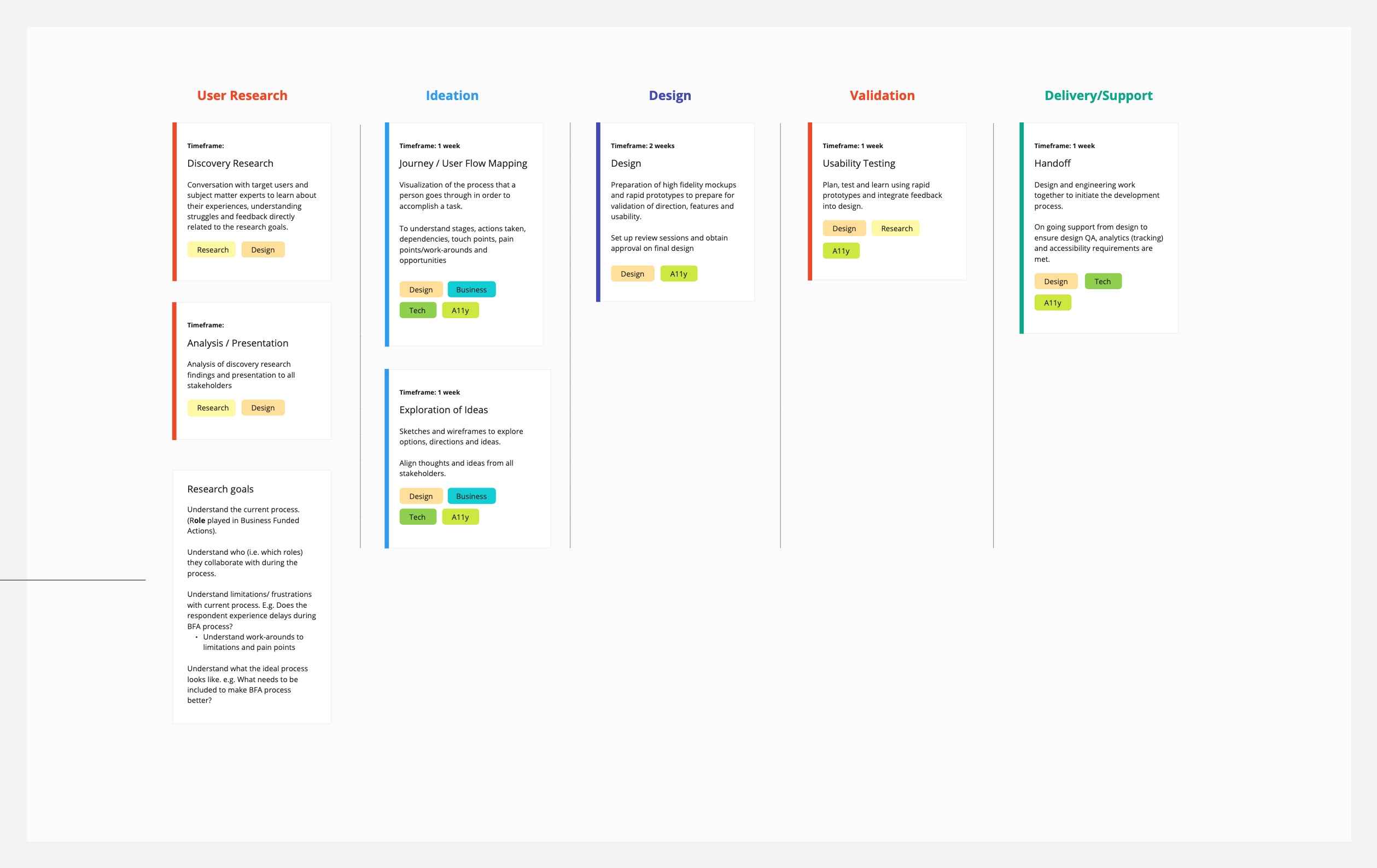
User Research and Execution Plan
In line with my standard approach, upon gaining clarity on the task at hand, I put together an execution plan to set expectations with key stakeholders and wrote a research brief tailored for Business Leaders, Legal, HRMPs, HRBPs, and HR Operations. The objective was to grasp the intricacies of the current process and delineate the roles played by each user group, while also identifying frustrations and collating a summary of needs.
The issues identified included:
- The manual process being unscalable and resulting in missed steps and information.
- Risk of email communication leak.
- Roles and responsibilities being unclear in some groups.
- Legal requirement nuances exist across the world, standardization may be difficult.
- No ability to look back in time due to lack of structured record keeping.
Demystifying the Complexity
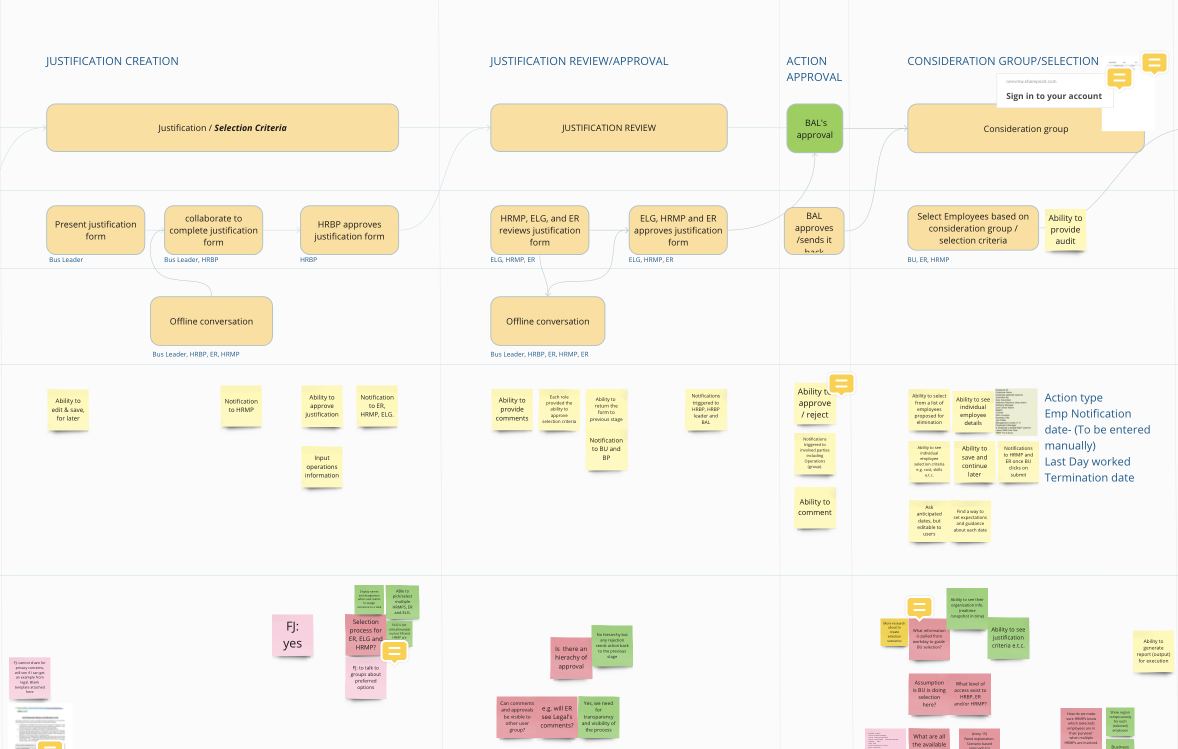
Given that employee elimination regulations differ worldwide, multiple user groups involved in the restructuring process and potential legal implications, collaborating with stakeholders was vital to understanding the diverse touchpoints and user interactions within the process.
Recognizing the involvement of numerous stakeholders in any given action, I opted for a hybrid approach that combines elements of a traditional user journey with those of a service blueprint in the workshop I ran. This method was chosen to meticulously document who is involved, their specific role, the timing of their involvement, and the medium. This hybrid artifact enabled us to harness the strengths of both frameworks, effectively mapping out the ideal user journey for business leaders while identifying both online and offline touchpoints crucial for advancing the process.
Creating the wireframes
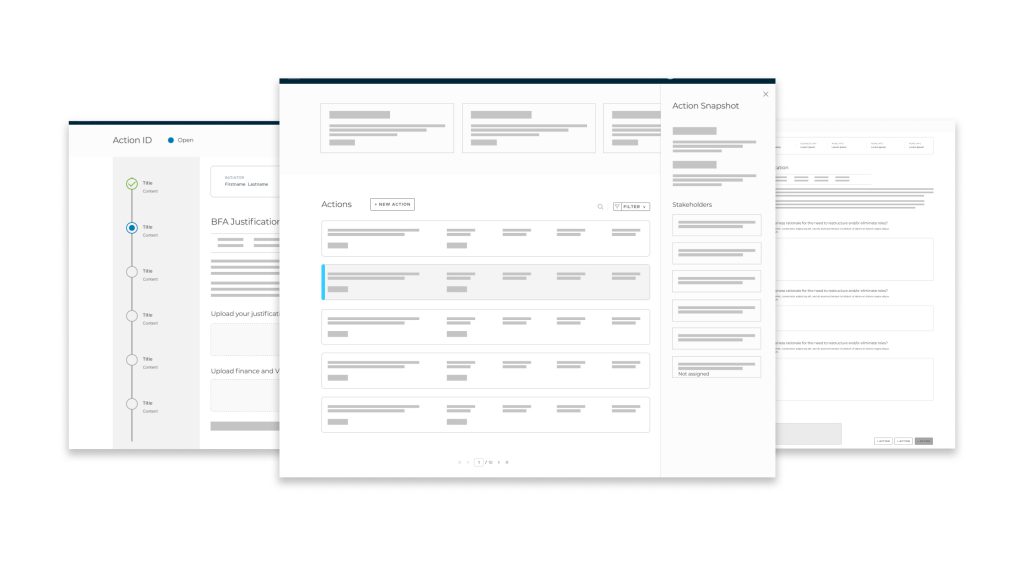
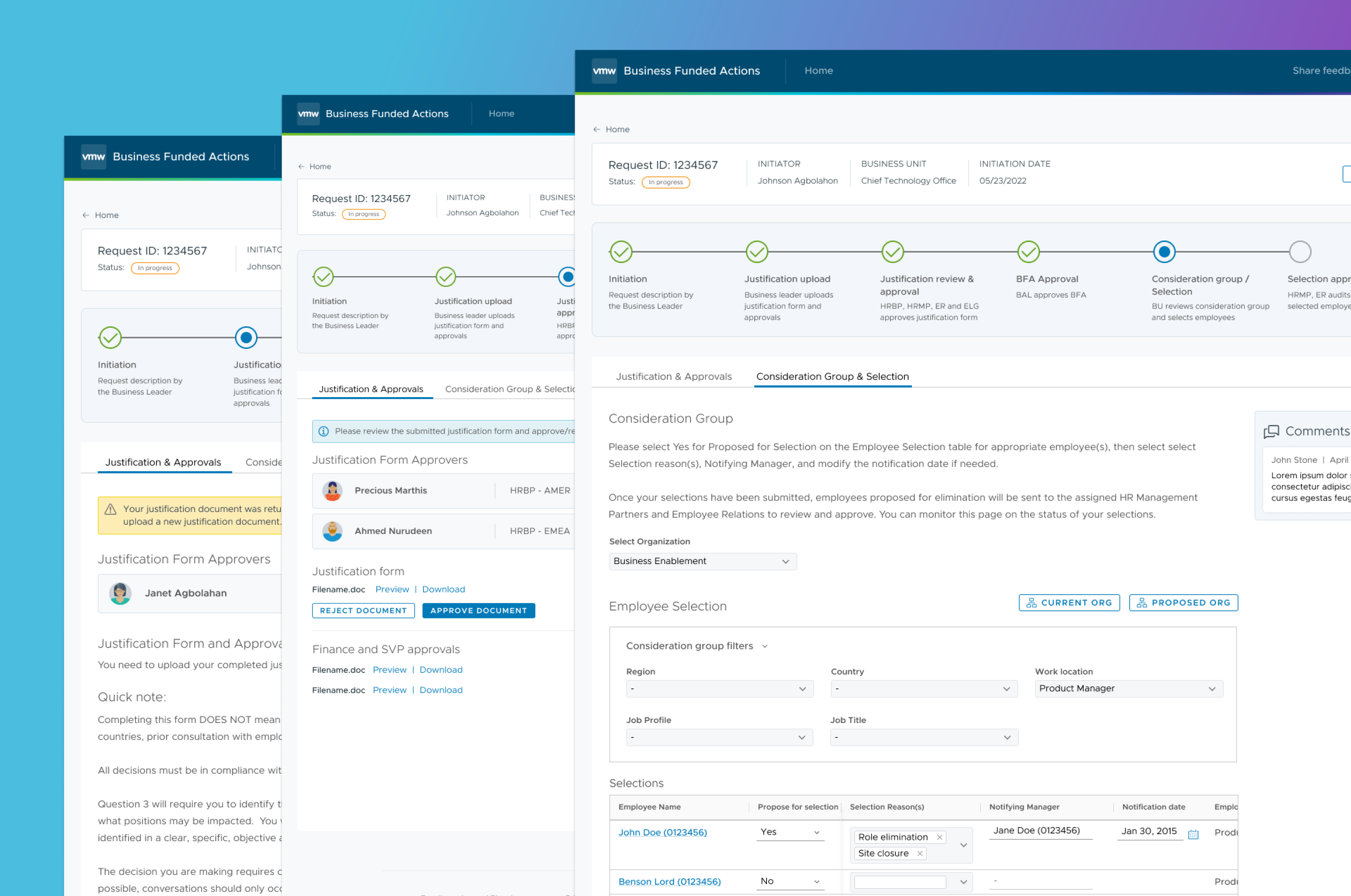
Wireframes helped me quickly visualize the layout and structure of pages, allowing me to share early ideas about the information architecture and iterate efficiently.
Design decisions and solutions
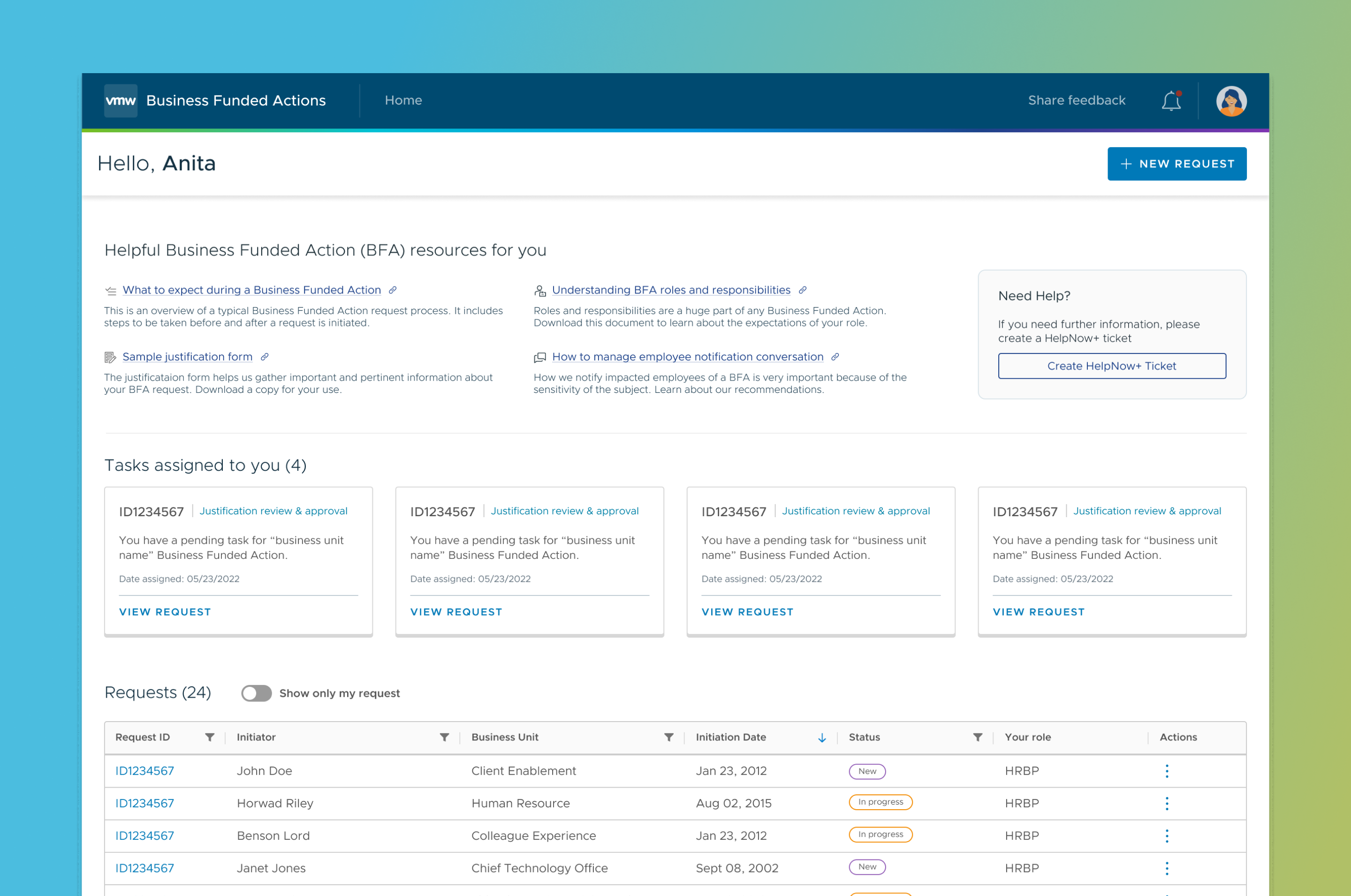
In designing the service, I made crucial decisions centered on user experience, particularly considering that business leaders would only utilize it occasionally. Prioritizing ease of use and learnability was paramount. As a result, I allocated prominent real estate on the homepage to refresh users on the process and furnish them with essential information to expedite their request. This strategic approach yielded significant dividends, as business leaders readily resonated with the user-friendly interface and interaction during subsequent usability testing sessions.
The high fidelity prototypes were instrumental in the design and development stages, enabling designers to expand on them to create additional screens. They served as a foundation for stakeholders to validate ideas and for usability testing, providing valuable insights. Ultimately, they facilitated the delivery of an efficient and user-friendly business process and platform.
Access Control
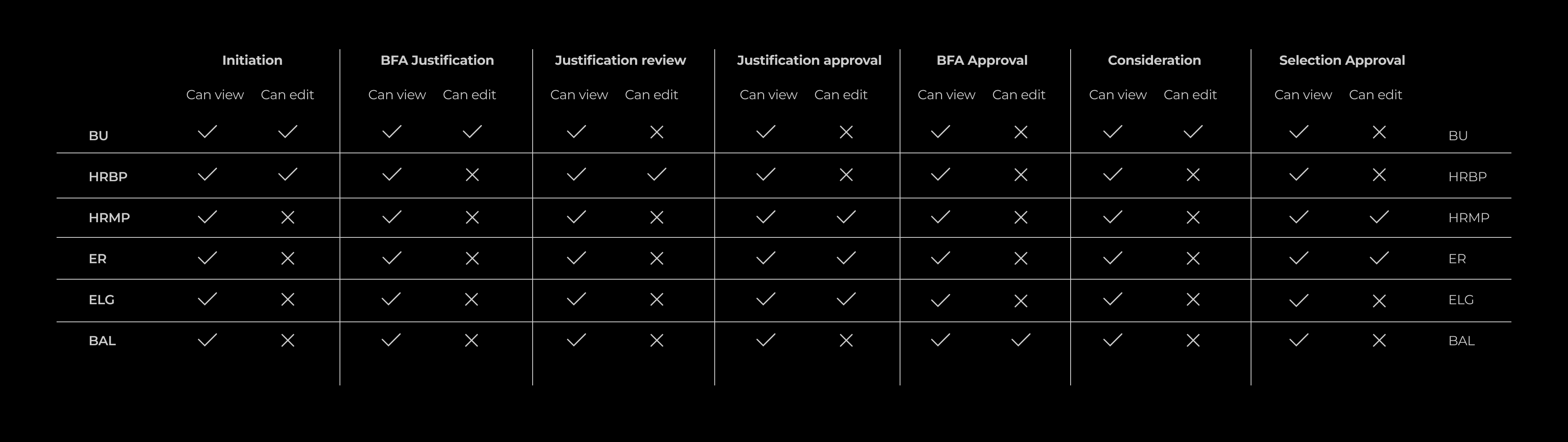
As part of the brainstorming exercises, it was important to document who would have access to records and pages of every action to ensure the employee data is protected.
We implemented a whitelisting method to grant access to essential user groups throughout each phase of every action. This involved establishing a protocol encompassing Create, Read, Edit, and Delete permissions, ensuring that users have appropriate access levels tailored to their roles and responsibilities. This methodical approach enhances security and control while facilitating streamlined collaboration and task management across the platform.
Clear Role and Responsibilities
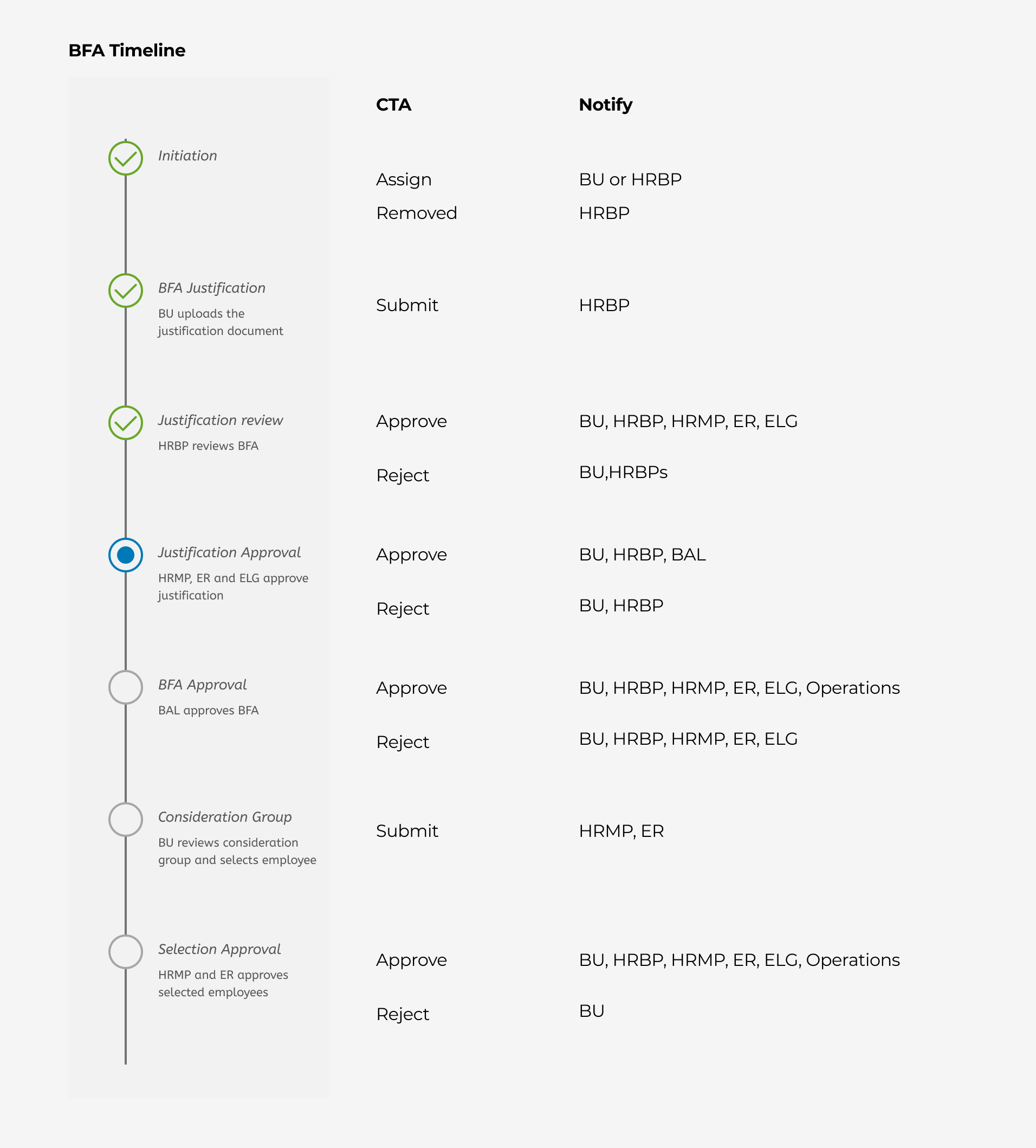
To address challenges related to roles and responsibilities, I developed a system that clearly identifies and timely notifies every team or individual required to take action. This design includes the implementation of both parallel and hierarchical approval mechanisms in critical areas of the automated process. This approach minimizes bottlenecks and ensures clarity in the progression of tasks.

Notification System
For this type of operation, getting notified on time is paramount to the success of the process. That’s why I created the notification system tied to each milestone in the process, ensuring timely communication across the board.
Status Management
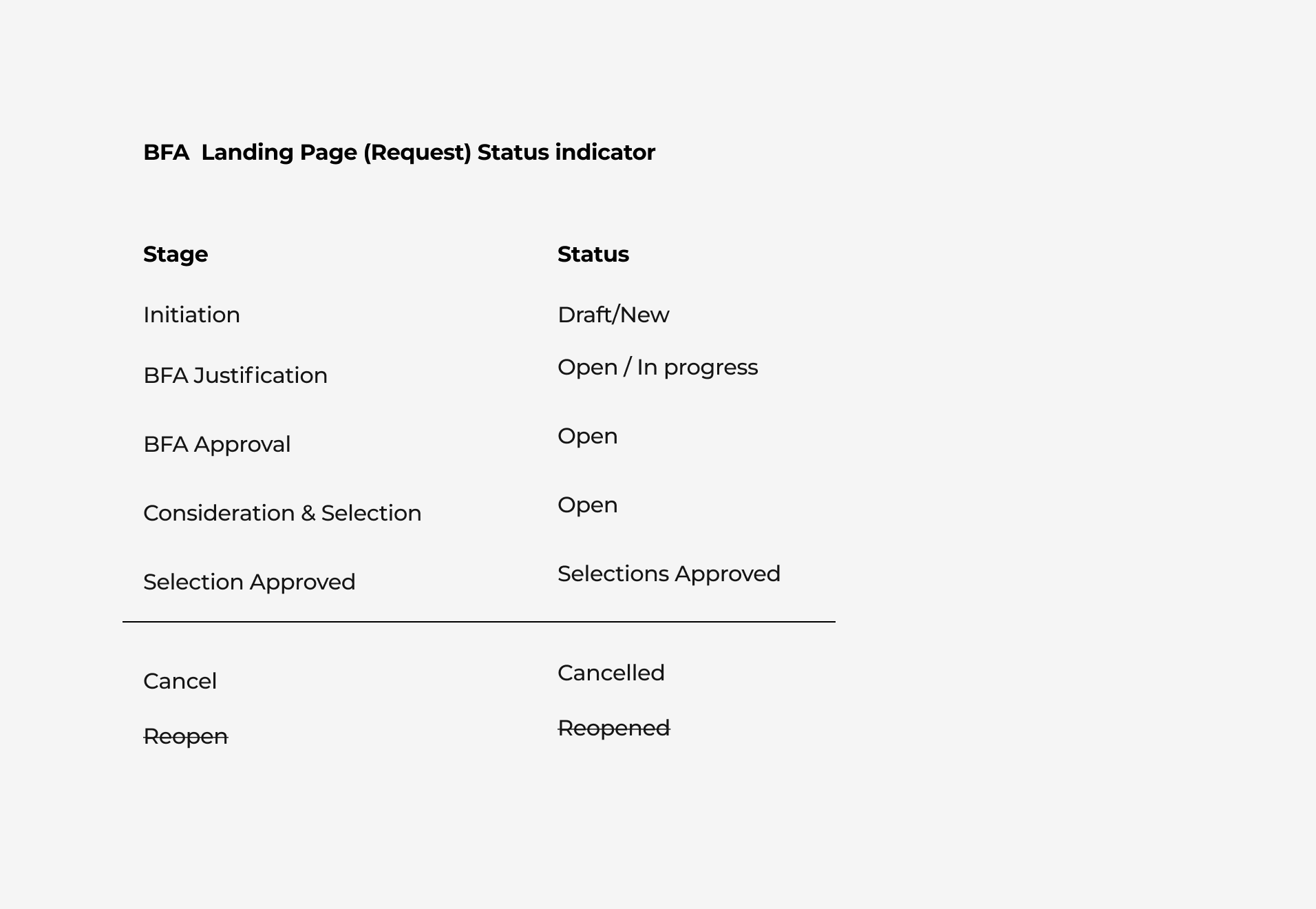
In collaboration with the core team, I designed status indicators that will guide each user, but especially the business leader to understand where they are in the process and what is left to be done.
High Fidelity Prototype

Curious about this case study and eager to delve deeper into the objectives, UX strategy, design process, success metrics and business impact? I would be delighted to share insights about these and the challenges faced, the innovative strategies employed and more from this compelling project during an interview discussion.
Feel free to contact me via email at frederick.ogunyomi@gmail.com

